Operation Searchlight: How One Pakistani Journalist Circumvented State Censorship
This year marks the 50th anniversary of the Bangladesh Liberation War.
Trigger Warning: Contains mention of Sexual Violence, Genocide, Militarization
Sam M. • 2021
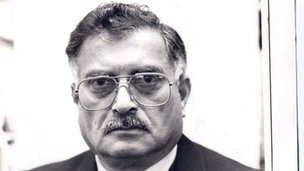
Journalist Neville Anthony Mascarenhas of Karachi
“Abdul Bari had run out of luck. Like thousands of other people in East Bengal, he had made the mistake, the fatal mistake of running within sight of a Pakistani Army patrol.”
[— Mascarenhas, 1971]
Those words became the first to reveal the campaign of violence carried out by the Pakistani Army against East Bengalis during the 1971 Bangladesh Liberation War.
Believing their operations were proceeding as planned, the Pakistani Army and the Ministry of Information wanted to bring in journalists to show the successful results of their military operations. With a ban on the foreign press, Neville Anthony Mascarenhas of Karachi — alongside seven other Pakistani journalists — were invited into East Pakistan on April 14, 1971. In relation to its West Bengal counterpart in India, this region is also referred to as East Bengal. Officially, the region was referred to as East Pakistan until it gained independence from West Pakistan in 1971. Today the country is officially known as the People’s Republic of Bangladesh.
Mascarenhas was born into a Catholic family on July 10, 1928, in Belgaum, Goa; at the time, Goa was controlled by the Portuguese Empire. Upon completion of his education at St. Patrick's College in Karachi, he joined Reuters India before later joining the government-owned news agency, Associated Press of Pakistan. In 1963 he joined Karachi’s Morning News. Accompanied by officers of the Ninth Division in Comilla, a city next door to Dhaka, Mascarenhas would spend ten days escorted through the region, documenting their operations — or, as the Pakistani Army saw it, a public relations campaign to justify the violence against East Bengal.
Upon their return to West Pakistan, seven of the journalists had their pieces approved by the Pakistani Army and published. Mascarenhas had yet to publish his piece, as he believed it would fail to pass the Pakistani Army’s editorial chambers and carry personal consequences. The genocide and systematic sexual violence carried out by the Pakistani Army against East Bengalis had yet to become public knowledge.
In 1757, the East India Company overthrew the last Nawab of Bengal. The East India Company was established in 1600 and given a royal charter from Queen Elizabeth I. The corporation first landed at the ports of India in 1608.
Beginning in 1757, British rule over Bengal would aid the Company’s ambitions to expand into the rest of India. Exactly a century later, the Indian Rebellion of 1857 took place. Started by Dalit worker Matadin Bhangi, the rebellion was effective in mobilizing the masses for the freedom struggle, but it found itself quelled immediately by British rule. A year later, in 1858, the East India Company was relieved of its duty, and power over India was transferred to the British Crown. Under British rule, the Bengal region was partitioned several times and merged with surrounding regions. The British partition of the Bengal region in 1947 concluded with West Bengal going to newly independent India; East Bengal became East Pakistan and a part of newly independent West Pakistan. The partition of India was influenced by the two-nation theory: it theorized that the difference between Muslims and Hindus called for a separate state for each and that the region’s survival depended on this. Bangladesh’s fight for independence from West Pakistan is used as an argument against the two-nation theory, as the nation’s shared majority Muslim status did not result in a shared sense of nationalism.
During the 1947 Partition of India, the Muslim ruling class left for West Pakistan. During British rule, the British recruited Panjabis for the British Indian Army in large quantities. This led to elite Panjabi officers filling the senior ranks of Pakistan's civil service and Army. After partition, West Pakistani elites waited decades before implementing a democratic political system; Pakistan’s failure to hold regular elections meant power did not transfer over to Bengalis in East Pakistan and remained in the hands of Pakistani Panjabi elites. The lack of non-Bengalis involved in government affairs is one of the factors that helped exacerbate the sense of superiority the West had towards their Eastern counterparts. Another one of the factors that exacerbated this was the West’s perception of those in East Pakistan, as not Muslim enough. In 1970, the Pakistani Government held its first general elections, with seats being allocated based on population. The majority of East Pakistan’s seats went to a party called the Awami League, which put Bengali independence at the forefront of their campaign agenda. What followed as a result of the election was Operation Searchlight — the Pakistani military’s coordinated infiltration of East Pakistan and attempts to suppress East Bengal’s independence movement.
At the time, the Pakistani Government permitted one international flight a year. In mid-May, Mascarenhas took his yearly flight to London on the grounds that he was going to visit his ill sister. Once in London, he headed to the editor at The Sunday Times, Harold Evans. With Evans's permission, the story that Mascarenhas was censored from running in his own country, was prepared for publication in the United Kingdom. But before the story could run, Mascarenhas had one more task: Mascarenhas first had to return to Pakistan to avoid suspicion and get his family out.
Yvonne Mascarenhas, the journalist's wife, heard a knock at her window. It was the telegram man with a message that read, "Ann's operation was successful." That was Anthony’s signal to Yvonne to prepare to leave Pakistan. While Yvonne and their five children took the flight to London, Mascarenhas had already used his international flight for the year. Hence in early June, he flew domestically from Karachi to Peshawar, and then made his way into Afghanistan by land. He then took a flight from Kabul and landed in London on June 12. The day following Mascarenhas’s reunion with his family, the story was published, and the world came to know of the atrocities committed by Pakistani forces against East Bengalis.
Dhaka University became one of the forces’ first targets. On March 25, 1971, Pakistani forces used military artillery and machine guns on the university’s residential quarters, Jagannath and Iqbal Hall. Jagannath Hall was for non-Muslims students and had a large Hindu population, and many of the residents in Iqbal Hall were members of a student wing of the Awami League party. Forces entered the halls the morning of the 26th, executing students, professors, and staff into the night. Dhaka University students and employees carried the bodies of those executed to a mass grave and were then met with the same fate.
Along with targeting Bengali children, men, and minorities, Pakistani forces and collaborators carried out a campaign of systematic sexual violence against 200,000 to 400,000 women and girls. After the Bangladesh War for Independence, the government gave survivors the title Birangona, translating to “War Heroine.” Facing marginalization and stigmatization from society and their families, some died by suicide; others died during pregnancy or were trafficked to brothels across South Asia and the Arabian Peninsula. Sheikh Mujibur Rahman, known as Bangladesh's founding father and first prime minister, told the nation: “give due honor and dignity to the women oppressed by the Pakistani Army.” The government set up clinical support and a rehabilitation center, prioritizing survivors with medical concerns. In an attempt to honor survivors, Rahman set out to make a list of their names; survivors did not come forward due to fears of further marginalization, and the idea was discarded.
Mascarenhas' piece influenced Indian Prime Minister Indira Gandhi's decision to consolidate India’s foreign interests in the region and prepare the Indian Army for war, as East Bengal was in a position to become a potential ally for India. The Indo-Pakistani War of 1971 began with forces facing off at the West Pakistan-India and India-East Pakistan border. Both the Indo-Pakistani War and the Bangladesh War for Independence came to an end on December 16, 1971. Bangladesh's 1971 War for Independence can trace its roots back to Partition, as the seeds for exacerbated violence stemmed from ideas of religious totalitarianism and existing systems of caste apartheid of which the British took advantage. By publishing through The Sunday Times in London rather than through Pakistan's censored press, Mascarenhas was able to expose the genocide to an international audience. This past March the 26th, Bangladesh commemorated the 50th anniversary of the Bangladesh Liberation War.
About
Paramodern Systems (est. March 2023) is an archive established by Sam M. and is dedicated to the artistic + scientific exploration of cognition, culture, and computation. The archive serves as a time capsule to document the evolution of both her ideas and skills. Her more specific interests include psychosis, AI safety, AI + mental health, and the cultural movement of Modernism. She is currently studying film as an undergraduate with a focus on new media technologies.
At the center of her work are the following questions: what are the plurality of ways in which humans are navigating the transition into the intelligence age? And can societal friction and turbulence surrounding AI be engineered to serve as a means of productive tension? Her work on how cultural logics can shape the cognitive-computational framework underlying an AI researcher’s approach to alignment is one project focusing on such questions (link).
In addition to these area of inquiry, she is examining the phenomenon of AI and psychosis, as reported by the New York Times. Her lived experience with psychosis and schizophrenia equips her to explore this phenomenon from a distinct artistic and scientific perspective. At the center of her work are questions regarding AI safety, medical ethics, and responsible technological development, as she believes such frameworks should be integrated into the design of AI systems rather than treated as an afterthought.
Whether you’re someone concerned with the uncertainty surrounding technological development and its cognitive impact, or an avid user of artificial intelligence, or someone engaging with the area via a research/scientific/artistic perspective — this archive can serve as one perspective among the vast sea of many on what it means to be human in the intelligence age.