
The Journalism Code of Ethics Through an Introspective Lens
“Although the two are very separate styles of writing, for me, personal writing and journalistic/analytical writing go hand in hand.”
Part 1: Introduction
Part 2: Objectivity
Part 3: Honesty and Transparency
Part 4: Sound Judgment
Part 5: Reliability and Trustworthiness
Part 6: Conclusion
2020
Prologue
This is an essay I cherish for many reasons. One of the reasons being the timestamp it represents in the timeline of my life. I wrote this piece a few years ago amidst the pandemic. There’s a line that says: “The assignment on meta-texts was the first personal piece that I received an A on, making this growth not only one that I found fulfilling as a writer, but also as an introspective human forever in the continuous process of becoming self-aware.” Continuous process of becoming self-aware…continuous… . I had yet to know that a week or so later I would start experiencing the first of my psychotic symptoms. Little did I know that it was the start of 1.5 years of experiencing psychotic symptoms. So apparently it’s not a continuous process of becoming self-aware. It is one which is non-linear. As someone who likes the organized nature that comes with linearity this is something I have had to come to terms with. Thus, this essay stands in the moment of my timeline as one that embodies my peak self-awareness before succumbing to the complete opposite. It represents the stopping of the continuous linear process of my growth and self-awareness and the start of nonlinearity — metaphorically yes, but also literally due to the cognitive nature of psychosis. It embodies the depth of thinking I am capable of despite having schizophrenia.
Thesis: The academic origins of my introspective lens and writing skills will be used as the creative basis for my journalism code of ethics.
Part 1: Introduction
As a middle school student, I enjoyed writing only because I was good at it. Writing did not become a passion until I developed an interest in journalism at 15 years old. I saw writing in a new light after I realized that it gave me the ability to send a message, inform others, and connect with people from different walks of life. That realization played a crucial role in developing my passion for both personal essay writing and journalistic/analytical writing. Although the two are very separate styles of writing, for me, personal writing and journalistic/analytical writing go hand in hand.
I enjoyed analytical writing early on because it involved analyzing information and organizing it. During my sophomore year of high school, I spoke to my English teacher about taking her International Baccalaureate (IB) English course for junior year, and she encouraged me to go for it. I became interested in taking the course the same year I realized my passion for journalism. I believed that taking the most advanced English course available would be the best way to improve my journalistic writing skills in the classroom and pursue rigorous writing at my math and science high school, but I was prepared to go to a less-advanced class if it felt too difficult for my skill set.
Our first assignment for the class involved an analysis of The Great Gatsby. At the time, the analysis of literature specifically was not my primary interest, but the analysis aspect of it still kept me engaged in the writing process. Unfortunately, all my classmates failed the analysis paper except for two who received As; one was the girl known as the smartest student in the class, and then there was me; this was the sign that I was looking for, that this class’s analysis coursework was exactly what I needed to build my journalism skillset and that I would actually do well in it…only to find out I was wrong.
I was unprepared for the large number of personal reflections/essays that were involved. If my teacher asked me to analyze a piece of poetry, I could do it. Reflecting on a piece of poetry and connecting it to my life was another story. I found myself wondering why I rarely did well on the reflections; I believed myself to be a fairly skilled writer, yet I couldn’t understand why my analytic pieces and personal reflections were on the opposite end of the grading spectrum. After much thought, I came to the conclusion that I was straying from the personal aspect of the essay and making something else the focal point. I was approaching the format of personal essay writing through the lens of acquiring a technical journalistic skill…not a form of expression.
But that changed when my English teacher did a writing exercise called meta-texts. Meta-texts involved reading a literary piece at a very slow pace and typing every thought that came into our minds as we read it. This meant if we had a thought about what we were reading before we finished the sentence, we would have to jot it down. As I analyzed the piece, I was typing my open unconscious and conscious thoughts on a separate paper. This exercise forced me to look at what my unconscious thinks as I consume large amounts of information. It involved a great amount of introspection that I enjoyed because it felt as if I was analyzing data, a skill that I previously reserved for my journalism/reporting skills. The assignment on meta-texts was the first personal piece on which I received an A, making this growth not only one that I found fulfilling as a writer, but also as an introspective human forever in the continuous process of becoming self-aware.
Today, I still have difficulty writing personal essays without an informative article or piece of poetry to write it in connection to. I think my junior English class and the meta-text exercise was one step forward in allowing me to effectively write about myself. Even if I can mainly write about myself in relation to another piece of literature, I believe I made progress from where I was before.
Personal essay writing has allowed me to become a much more introspective person and therefore helped me to become more conscious of why I and others behave a certain way and are the way we are. As journalists, introspection plays a crucial role in holding ourselves accountable for errors and bias. I believe personal essay writing has helped me to become a better journalist because rather than analyzing data, it involves looking into my own conscious and unconscious.
This has also helped me as a human by allowing me to be comfortable with my insecurities. It allowed me to question how we as a society react to each other’s insecurities, when in fact every human being has to co-exist alongside their own set of doubts. Understanding the conscious and unconscious origins of my insecurities can also be effective for understanding bias I may perpetrate in my reporting, especially when it comes to the manner in which I behave with a source; this can be attributed to the potential relationship between insecurities and subconscious bias. As a result, the use of introspection to understand my and other people's behavior has allowed me to better communicate with sources and create a genuine connection.
As someone who best expresses herself by connecting her views to another piece of writing, I would like to use this opportunity to write my journalistic code of ethics through an introspective lens.
Part 2: Objectivity
While the reality of objectivity has been up for debate for decades, one thing that I do believe is certain is that as journalists, we should be conscious about how personal opinions inform our work. While personal experience can be an asset in evaluating a story, journalists should use introspection to make sure that they are not bringing bias into their work. Stories on issues involving race are examples where personal experience can bring a more accurate perspective to a story and improve your communication with sources.
If our personal opinions happen to align with the reality of the situation, then we should be able to find evidence or some basis that can confirm it. The catch to this, of course, is that it can lead to confirmation bias. As journalists, it can work to our advantage if we only feel validated in our argument once we have fully tested it against the opposing argument; what testing this would look like is instead of relying on our initial or first-reaction conclusion, we completely run through the logic of the initial conclusion/opinion against its opposing argument(s); one could see it as running a logical diagnostic. Not holding onto views until the opposing side has the grounds to be proven false is a useful mindset to have in journalism. This kind of mindset can help fight bias because it can allow us to be confident about whether we are right or should accept that we are wrong.
I believe having a mindset that runs a logical diagnostic is more effective compared to searching for evidence to confirm my theory. I believe denying Kant’s categorical imperative ethics theory would be a sign that a journalist may not be interested in looking at all sides of the story. If a journalist actively has the mindset that aligns with the categorical imperative ethics theory, it shows that they are there for the story and not to inject themselves into the narrative.
Part 3: Honesty and Transparency
Honesty and transparency play a crucial role in shaping our credibility as journalists. It also contributes to our connections with our sources. Honesty does not necessarily need to rely on the definition that one should not lie. Honesty also means genuinely trying to connect with sources. As human beings and as journalists dealing with sources of varying personalities, it is smart to not underestimate someone else’s instincts. One can argue the logic that if our gut instincts as human beings allow us to subconsciously detect when someone has dishonest intentions or is ingenuine, then we can argue what would prevent another human, in this case, a source, from detecting the same about journalists. This is especially relevant within the context of privileged journalists entering marginalized communities and their relationship of trust or distrust with the community members, as marginalized groups have been conditioned generation after generation to detect such intentions/behaviors as a survival mechanism.
When we interact with sources, we should question if there is a purpose for putting on an unnecessary, unnatural front in front of sources; an example of where it may be permitted is when a journalist is going undercover. The better undercover journalists understand their own conscious and subconscious behavior, the more effective they will be in keeping their cover and being safe. In some scenarios, it may not be best to put on a front such as when a source allows us into their home and shares an intimately personal story with us, as one of the worst things that can come across with an ingenuine persona is that it can give the impression that the journalist is talking to the source just to get the story.
When we interact with a source, it can be easy to resort to a persona, before we even try to genuinely connect with them and question if a persona is applicable in this situation. College freshmen are an example of why this kind of ingenuine persona is tempting, as they often feel pressure to network with their peers and professors. Some may be overly extroverted with their peers because they are trying to step out of their bubble during their time in college. On the other hand, some students may be excessive in how they network with others because their sole focus is to create a professional network that benefits them; conditioning and society’s pressure can play a strong role in this.
Even for those beyond their freshman years, networking does involve engaging with others in an environment we may not be used to. Putting on a persona during networking events can help people such as introverts, but our intentions strongly impact how we express that persona. A person who puts on a persona to step out of their introverted personality will come across much differently compared to an individual who puts on a persona for the sole purpose of using it to get something from others, in this case, the benefits that come with a networking connection. We can further argue in support of this by the fact that as human beings our gut instincts can subconsciously detect when someone has positive or negative intentions or a mix of both, even at times without our conscious realizing it. It may seem inherent to view networking as a task that does involve getting to know someone for the sole purpose of getting something from them, but as human beings, it is in our best interest to question what subconsciously motivates our behavior and if that subconscious behavior aligns with our values. Putting on a persona during a networking event or in front of a source does not necessarily mean one has ill intent; through introspection, one can try to understand if they are tempted to put on a persona because they have a justifiable or ill intent behind it or a mix of both.
Introspection can help journalists to understand the “why” behind why they feel the need to put on a persona when they interact with a source. Understanding the reasoning behind a persona can help journalists have a grasp on how they come across to others and communicate more accurately with each particular source and context.
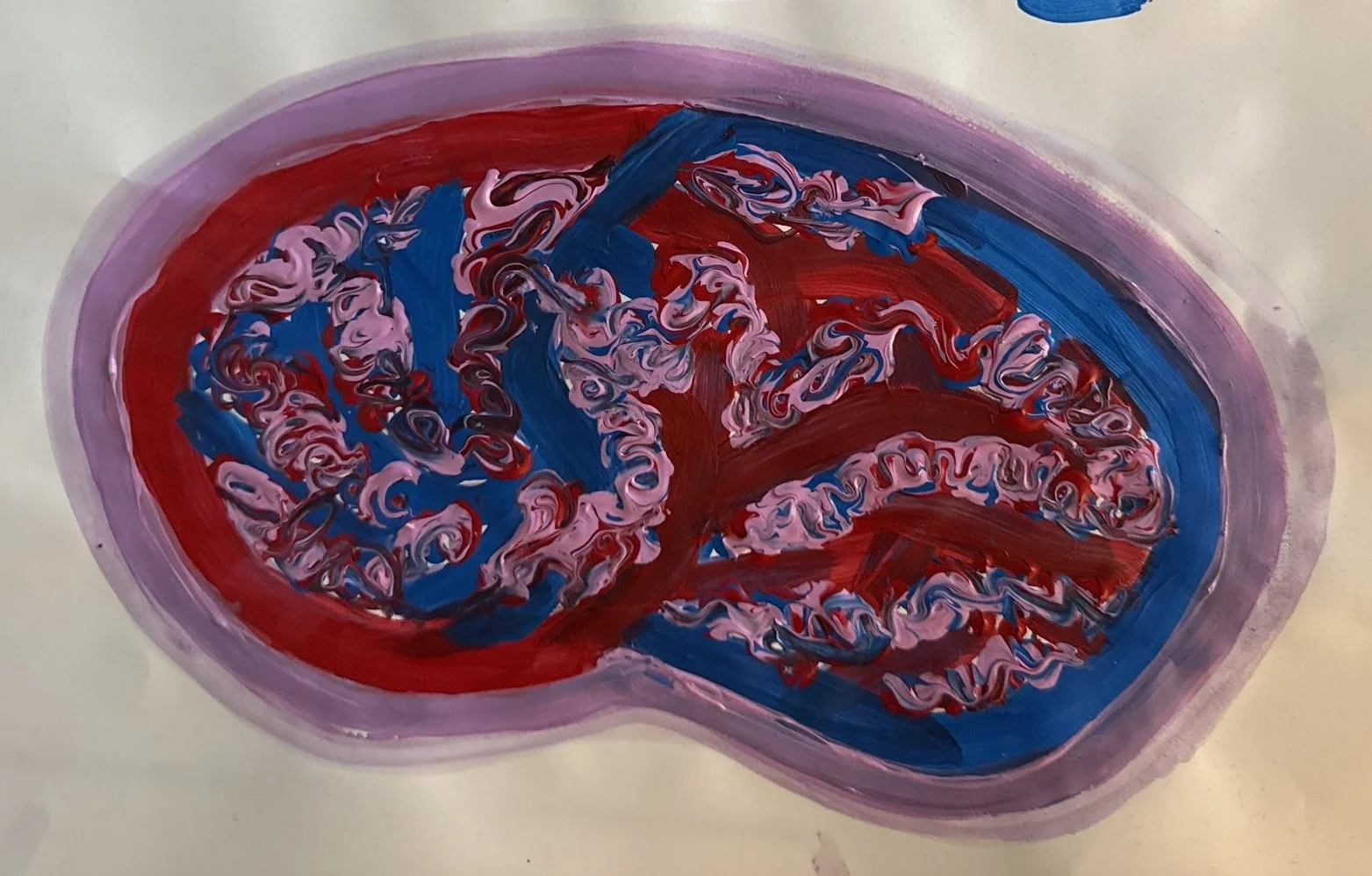
In cybernetics, a black box is a system which can only be observed based on its inputs and output, but not its internal workings. This aligns with the lack of understanding scientists have of psychosis.
The black box nature of psychosis aka the inability to know it and understand it, also plays a role in society’s stigma towards people with psychosis. As Ayurdhi Dhar argues in her piece titled “Madness and subjectivity: A comparative study of insanity and the subject in modern west and post-colonial India”:
“The operationalization of schizophrenia became an immediate priority to mitigate the threat its ambiguity posed,” adding “McNally (2016) suggests that this tabulation, interest in taxonomy, and the urge to classify can be traced to Foucault’s claim that there was an institutional desire to count and classify madness, to standardize the population through examination, and to tabulate and record their movements.””
Part 4: Sound Judgment
Sound judgment is a crucial quality that is not only reserved for our profession as journalists. It can be difficult to obtain because it is not a quality that can easily be instilled within children, as it is developed with time and maturity. A college freshman can have good judgment for most teens their age, but their sense of judgment will further sharpen as they grow older. As journalists and especially student journalists, we must use our sound judgment alongside the skillsets we develop. The information our professors give us will help improve our journalistic skills, but as we utilize our training we should consider the context.
An example of this can be drawn from our class discussion about when cameras should be used in the courtroom. We were firmly told that no matter what, cameras should be allowed in the courtroom to keep officials accountable. As students, we need to develop sound judgment to understand that despite a professor firmly telling us how something should be done, there may be a contexts where we will need to go against it. An example of this would be recognizing that the use of cameras may be seen as disrespectful or invasive if someone such as a minor or trauma victim is testifying. A journalist who lacks sound judgment would pursue the unethical decision to film the minor or victim’s testimony, simply because their training firmly told them to do so. While sound judgment in itself does not directly pertain to ethics, it can help journalists to make ethical decisions when encountering new scenarios.
Part 5: Reliability and Trustworthiness
When coming across sources with incredible stories, it can be an honor to have the responsibility to document such stories because they have no obligation to share them with us. If a source is willing to step out of their comfort zone to share a story with a stranger, we as journalists have a responsibility to take care of that story by honoring promises that we make. It should be noted that a source may have a different definition of taking care of their story compared to what a journalist deems professionally appropriate.
As discussed in class, not keeping our promises as journalists comes with consequences for our credibility…but it also shows the level of respect we have for our profession. If we are careless with the information sources share with us, sources have the right to refrain from sharing more details. Handling a source’s information carelessly is also a sign that a journalist does not understand the importance of keeping themselves out of the journalistic narrative. While there are professional repercussions in sharing our reportage outside of our professional responsibilities…to no surprise, this comes with its own ethical dilemmas.
As journalists, we may come across sources who will leak information that they were prohibited from sharing, and this is where sound judgment plays a crucial role. One’s values will determine if they believe there is a difference between someone who leaks information because they are an unreliable/unprofessional journalist versus someone who leaks information that they believe the public must be informed about. I believe addressing this ethical dilemma on a basic level is a great way to understand how journalists would deal with different scenarios. This ethical dilemma can help continue the conversation on scenarios such as how to handle whistleblowers who leak important information to the public but are also simultaneously interpreted by other sectors of society as a threat to national security.
Part 6: Conclusion
Thus, this essay demonstrates how the academic origins of my introspective lens, and personal and analytical writing skills played a crucial role in framing my journalism ethics.
Additional Readings/Links
-

The Systems Approach to Creativity
By A. Montuori
-

Foucault — The Lost Interview
Lionel Claris/Youtube
-

The Unconscious
By Sigmund Freud
-

Cybernetics: or Control and Communication in the Animal and the Machine
By Norbert Wiener
About
Paramodern Systems (est. March 2023) is an archive established by Sam M. and is dedicated to the artistic + scientific exploration of cognition, culture, and computation. The archive serves as a time capsule to document the evolution of both her ideas and skills. Her more specific interests include psychosis, AI safety, AI + mental health, and the cultural movement of Modernism. She is currently studying film as an undergraduate with a focus on new media technologies.
At the center of her work are the following questions: what are the plurality of ways in which humans are navigating the transition into the intelligence age? And can societal friction and turbulence surrounding AI be engineered to serve as a means of productive tension? Her work on how cultural logics can shape the cognitive-computational framework underlying an AI researcher’s approach to alignment is one project focusing on such questions (link).
In addition to these area of inquiry, she is examining the phenomenon of AI and psychosis, as reported by the New York Times. Her lived experience with psychosis and schizophrenia equips her to explore this phenomenon from a distinct artistic and scientific perspective. At the center of her work are questions regarding AI safety, medical ethics, and responsible technological development, as she believes such frameworks should be integrated into the design of AI systems rather than treated as an afterthought.
Whether you’re someone concerned with the uncertainty surrounding technological development and its cognitive impact, or an avid user of artificial intelligence, or someone engaging with the area via a research/scientific/artistic perspective — this archive can serve as one perspective among the vast sea of many on what it means to be human in the intelligence age.