AI and Psychosis:
Power Dynamics Between Cognitively Vulnerable Sources and the Media
“If the government is backed up on responding adequately to AI developments—and, as a side effect, cannot be expected to adequately address psychosis arising from AI and user interaction; if medicine is moving slowly; if technology companies are too opaque for the public to understand what they are doing; and if the media have legal priorities that may or may not align with your own, try to look toward the people in your life whom you have a history of trusting for support.”
Sam M.
July 13, 2025
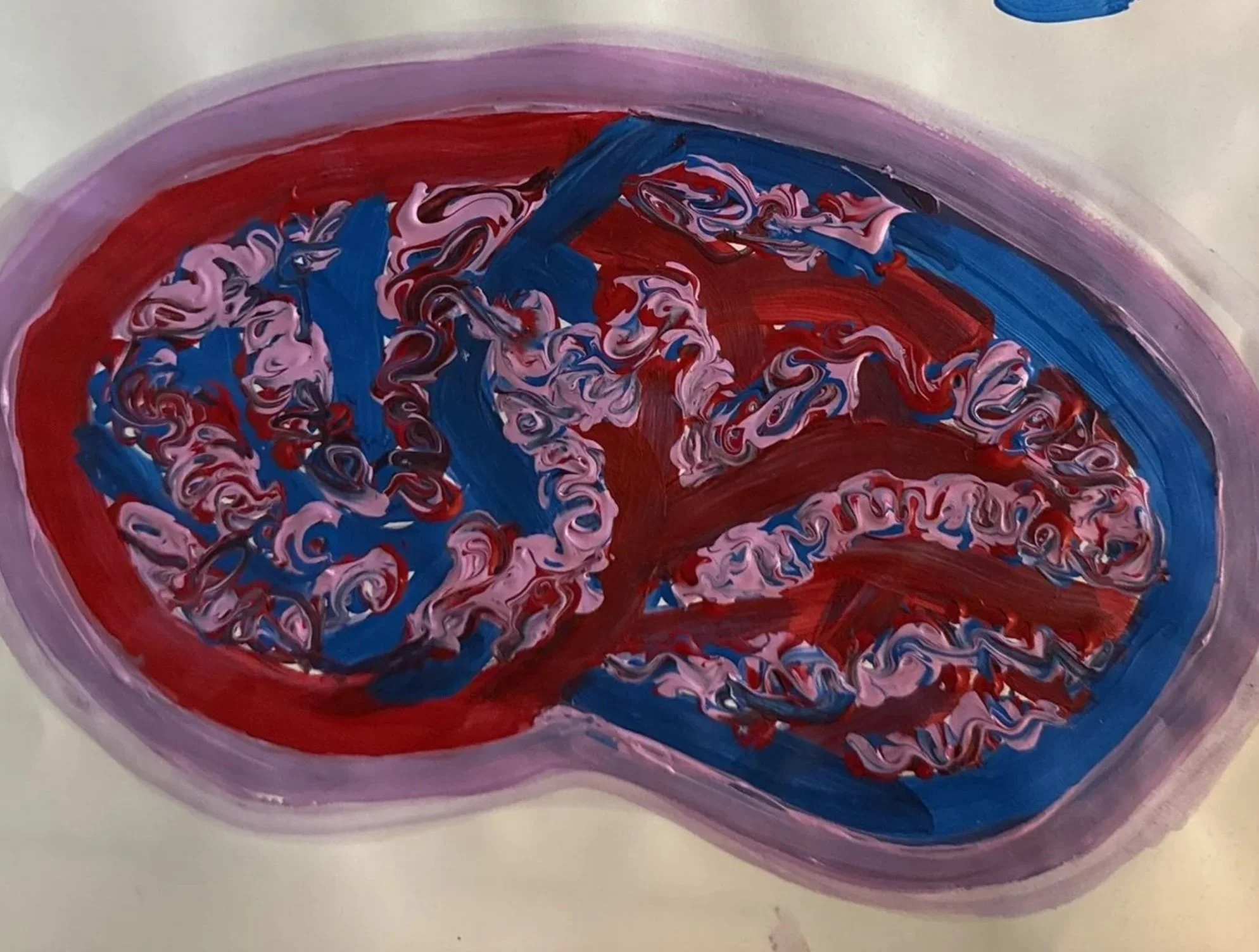
If you're experiencing psychosis resulting from AI and human interaction, stop contacting the New York Times, the media, and prominent individuals.
A New York Times article on psychosis from AI and user interaction says the following:
OpenAI CEO Sam Altman tweeted the following on 06/26/25:
Sam Altman’s tweet is best understood by taking into account potential underlying company incentives that are present combined with legitimate concerns for user privacy he may have. His tweet is better evaluated by thinking about this issue independent of OpenAI’s stance and in this process one can assess the extent to which it is of importance to psychotic people reaching out to the New York Times, media and prominent individuals. This is especially a concern considering users and the general public don’t always know about on the record, on background, deep background, and off the record (Oxford University Press). As stated by the New York Times themselves, users are contacting them after being cognitively impacted by ChatGPT. They are contacting the New York Times and other prominent individuals while in a cognitively vulnerable state; some users are found online being meta-aware that the AI is cognitively destabilizing them and urgency surrounding this concern pushes them to reach out.
Users may not be able to determine how the information they share with the New York Times — including ChatGPT conversations or Help Center communications — will ultimately be used if they do not know what questions to ask. The New York Times will likely preserve your documents related to OpenAI per a litigation hold. If you are adamant on reaching out to the New York Times, for example about the cognitive impacts of ChatGPT, ask for clarification on the legal language of the New York Times’ lawsuit disclaimer. Documenting in clear writing requesting the New York Times to clarify the legal disclaimer and getting a clear response will let you assess if the New York Times priorities are aligned with your personal priorities as a source; if the New York Times transparency about their priorities have some form of alignment with your priorities, then proceed. If you are not given a clear answer after multiple requests, question if you want to proceed with a publication that has not been sufficiently transparent about its priorities to cognitively vulnerable sources.
If you’re in a cognitively vulnerable state, instead of contacting the New York Times, the media and other prominent individuals, direct yourself towards mental health resources, although the unfortunate reality is not everyone has access to such. Reconsider if you actually want to contact media and prominent individuals as when certain individuals see users in a cognitively vulnerable state, they may interact with them based on unintentional or intentional stigma; people acting out of intentional stigma, rather than unintentional bias, may see it as an opportunity to exploit users in a cognitively vulnerable state; this is especially the case considering that psychosis is one of the most stigmatizing cognitive experiences.
Unfortunately one possible side effect that can come with making this power dynamic between media and sources salient is paranoia; thus, the purpose of making this power dynamic clear is to encourage AI users in cognitively vulnerable states to reevaluate if the media are the best people for your concerns about ChatGPT.
The most important thing you can do is seek mental health resources. If you have insurance, you can use your insurance company’s website and its search engine to find a clinician or even call your insurance company on the phone as not all have search engines. If you can’t get access via traditional means, such as due to insurance, consider paying for an one-time session (or a few) with a psychologist and/or psychiatrist that preferably specializes in psychosis. At times, clinicians can be seen not being familiar with the emerging phenomenon and if they have unconscious stigma, they may be limited in assisting you when communicating your experience with psychosis from AI and human interaction. Thus, consider bringing news articles (Rolling Stone, etc) relevant to the issue with you. If mental health services aren't accessible, try to seek support from loved ones (family, friends, etc). If the government is backed up on responding adequately to AI developments — and, as a side effect, cannot be expected to adequately address psychosis arising from AI and user interaction; if medicine is moving slowly; if technology companies are too opaque for the public to understand what they are doing; and if the media have legal priorities that may or may not align with your own, try to look toward the people in your life whom you have a history of trusting for support.
“In recent months, tech journalists at the New York Times have received quite a few such messages, sent by people who claim to have unlocked hidden knowledge with the help of ChatGPT, which then instructed them to blow the whistle on what they had uncovered.”
“AI privacy is critically important as users rely on AI more and more.
the new york times claims to care about tech companies protecting user’s privacy and their reporters are committed to protecting their sources.
but they continue to ask a court to make us retain chatgpt users’ conversations when a user doesn’t want us to. this is not just unconscionable, but also overreaching and unnecessary to the case. we’ll continue to fight vigorously in court today.
i believe there should be some version of “AI privilege” to protect conversations with AI.”
“Journalists aren’t the only ones getting these messages. ChatGPT has directed such users to some high-profile subject matter experts, like Eliezer Yudkowsky…”
Resources
-

The Human Line Project
“The Human Line Project is actively working on making sure we keep human well-being at the center of design.
The Human Line Project is the world's first nonprofit dedicated to documenting and addressing AI-induced psychological harm.” -
Active Minds
“Active Minds mobilizes youth and young adults to lead a transformative movement in mental health…”
-

AI and psychosis: What to know, what to do
“As concern grows about online chatbots and mental health, an expert cautions about potential risk to already-vulnerable people, especially teens and young adults.”
About
Paramodern Systems (est. March 2023) is an archive established by Sam M. and is dedicated to the artistic + scientific exploration of cognition, culture, and computation. The archive serves as a time capsule to document the evolution of both her ideas and skills. Her more specific interests include psychosis, AI safety, AI + mental health, and the cultural movement of Modernism. She is currently studying film as an undergraduate with a focus on new media technologies.
At the center of her work are the following questions: what are the plurality of ways in which humans are navigating the transition into the intelligence age? And can societal friction and turbulence surrounding AI be engineered to serve as a means of productive tension? Her work on how cultural logics can shape the cognitive-computational framework underlying an AI researcher’s approach to alignment is one project focusing on such questions (link).
In addition to these area of inquiry, she is examining the phenomenon of AI and psychosis, as reported by the New York Times. Her lived experience with psychosis and schizophrenia equips her to explore this phenomenon from a distinct artistic and scientific perspective. At the center of her work are questions regarding AI safety, medical ethics, and responsible technological development, as she believes such frameworks should be integrated into the design of AI systems rather than treated as an afterthought.
Whether you’re someone concerned with the uncertainty surrounding technological development and its cognitive impact, or an avid user of artificial intelligence, or someone engaging with the area via a research/scientific/artistic perspective — this archive can serve as one perspective among the vast sea of many on what it means to be human in the intelligence age.